‘A country with a tremendous spirit of independence, enlightenment, struggling and often succeeding to put people first, at a time when my country has people under the boot heel of profit and is behaving reprehensibly in front of the whole world.’
I was speaking to the best-selling American novelist Elizabeth Kostova about how she has experienced Scotland during a two-month long writing residency, here in my home community of Birnam and Dunkeld.
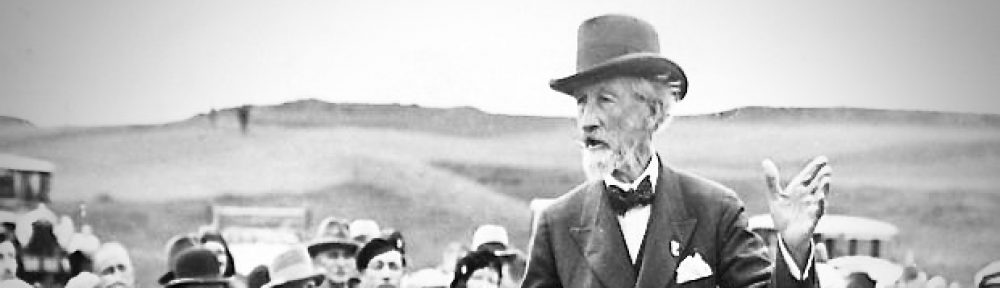
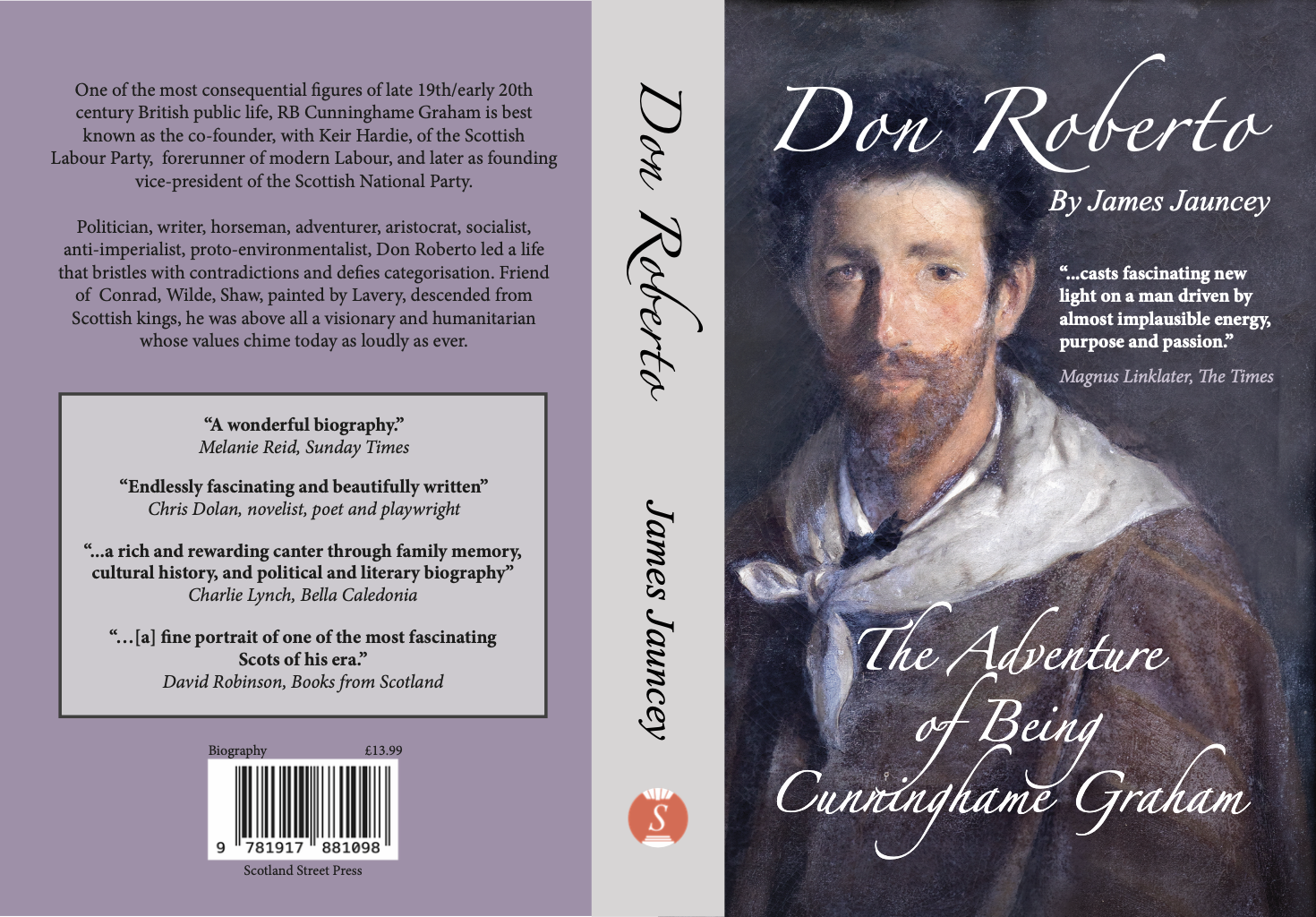
This in the run-up to next week’s Scottish elections, and the week when I have also been working on my biography of my great-great-uncle, Don Roberto: the Adventure of Being Cunninghame Graham, in preparation for publication of the paperback later this month.
We had originally hoped to have it ready for election day – he was, after all, instrumental in the founding both of Scottish Labour, forerunner of the modern Labour Party, and of the Scottish National Party – but that proved impossible. Now it will go on sale on 28th May. Meanwhile, the publicity machine is gearing up.
‘Tell me what Don Roberto has to say to us, today,’ asked Deanna, the publicist. What indeed? It’s not an easy question to answer because his is such a vast and intensely-lived life; and although, or perhaps because, I have come to know it intimately, it is difficult to find the necessary perspective.
I could talk about his burning desire for social justice, his disgust at posturing and inauthenticity, his loathing of empire and exploitation, his contempt for complacency and lazy social mores, his abiding hatred of bullies, and his physical and moral courage in pursuing what were often wildly unfashionable beliefs.
I could talk about how as a young man in Argentina he forded a swollen river at night to take medicine to a neighbour and ended up with typhus; how at Westminster he fought to the point of personal exhaustion for better employment conditions and an eight-hour working day; or how, during the first world war, he secured the best possible conditions of transport for horses going to the front, knowing they would be killed within days of arrival.
But I would rather let him speak, and he does so in the writing of the stories and sketches that occupied him for the second half of his life. There is one in particular that I believe conveys something essential about the way he saw the world.
A Hegira (you can read it here) describes how, in Mexico City, he comes across a group of Mescalero Apaches, captive and in irons. Later, as he travels north towards Texas, he learns that they have escaped and that his route tracks theirs as they make for the safety of their own lands.
He describes their desperate flight in a way that is sad beyond words, made still more so by the unsentimental manner of the telling and by its many ironies: the terror the pathetic little band of fugitives inspire wherever they pass; the pride taken in the killing of exhausted, unarmed Indians by armed and mounted Mexicans; the scalping of an Indian by a European.
In response to my questions abut her experience here, Elizabeth Kostova asked me what I felt were distinctively Scottish characteristics. I found myself thinking of two documentaries by the Chilean director Felipe Bustos Sierra which both, in essence, tell the same story.
Nae Pasaran (a Scoticisation of the Spanish Civil War slogan ‘no pasaran!’, meaning ‘they shall not pass!’), recounts how, following General Pinochet’s 1973 coup in Chile, a group of shop stewards at the Rolls Royce aero-engine plant in East Kilbride refused, in solidarity with the Chilean people, to work on vital parts of Chilean military aircraft sent there for maintenance. Through their actions they grounded the Chilean airforce.
Everybody to Kenmure Street tells the much more recent story of how, in 2021, residents of Glasgow’s Pollokshields turned out en masse to thwart a dawn raid by Home Office immigration officials who had come to deport two Sikhs for alleged immigration violations. A huge crowd of local people gathered around the van in which the men were held. One man crawled under it and remained there for eight hours to prevent it moving. The officials left empty-handed.
My great-great-uncle was not a paragon and I would never wish for him to be thought of as one, but in the same way that he expressed his profound empathy for the Apaches in A Hegira, he also embodied the qualities and values displayed by those Rolls Royce workers and Pollokshields residents. Had he been alive in the 1970s, or the 2020s, he would have done the same.
As it was, he did the equivalent in the 1880s and 1890s when the world was perhaps a little less complicated, but society was a lot less forgiving. He was a deeply compassionate man, an humanitarian with the courage of his convictions and a fiercely campaigning spirit. He represented that essential kindness that so many Scots aspire to for themselves and their country, and which will only ever be fully realised with independence.
A Hegira is the name given to a perilous journey of escape, originally describing the flight of Muhammad from Mecca to Medina. The paperback of Don Roberto: the Adventure of Being Cunninghame Graham is available for pre-order here. You can watch the trailer for Nae Pasaran here, and Everybody to Kenmure Street here. And if you feel like an evening of 60s and 70s favourites, Amos & Jauncey & Friends are playing Perth Theatre today week, Friday 8th May. Tickets here.

